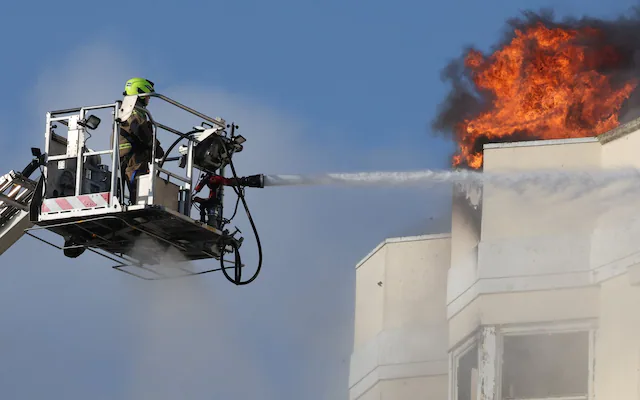
The Royal Albion Hotel Blaze: A Repeated Tragedy
A significant fire broke out in Brighton in July and caused the partial destruction of a Grade II* listed hotel. The incident resulted in even greater damage than the major fire that affected the hotel in 1998, raising serious questions about the reasons behind this repetition. Many observers highlighted that the much-loved hotel operated without sprinkler systems, a critical fire safety measure. Given the specific risks and complexities associated with hotel buildings, the absence of such systems continues to surprise specialists and the public alike.
Firefighting Response and Impact on Brighton
The fire engulfed the Royal Albion Hotel on July 15th. It left extensive debris and created major challenges for the firefighters who responded from three counties. Authorities evacuated the immediate area due to dense smoke and falling debris. As the smoke spread over Brighton, officials advised residents to keep their windows shut to avoid inhaling fumes. Strong winds fueled the blaze throughout the night and into the next morning. Fire crews from East Sussex, West Sussex, Surrey, and later the London Fire Brigade used high-volume pumps to control what became Brighton’s largest fire in 30 years. Concerns about structural stability forced emergency teams to demolish sections of the building. After two days of disruption, activity in the area slowly returned to normal.
Investigators later found asbestos in textured wall coatings. The blaze charred rooms throughout the building. The roof collapsed entirely. Although no casualties occurred, the fire left severe damage in every part of the hotel.
Previous Hotel Fires Highlight a Wider Pattern
Hotel vulnerability extends far beyond the Royal Albion case. In 2017, a fire at Cameron House Hotel near Loch Lomond killed two people and sent three others to hospital. A report by Sheriff Thomas McCartney urged regulators to require active fire suppression systems, especially sprinkler systems, in historic buildings converted into hotels. The Royal Incorporation of Architects in Scotland supported this recommendation and encouraged its use in all public-access buildings. Cameron House later reopened with enhanced fire safety measures, including a sprinkler system.
A similar pattern appeared in 2019 when a fire destroyed the Grade II listed Victorian Claremont Hotel in Eastbourne. Safety concerns forced the demolition of the structure. Nearly four years later, the Claremont Hotel still awaits restoration.
Despite these repeated events, current building standards still lack clear rules that require sprinkler systems in hotels. This applies regardless of building height. Stronger regulations would allow sprinkler systems to activate immediately and contain fires before they spread. Evidence shows that sprinklers not only limit damage but also protect human life. To break the cycle of history repeating itself, regulators must close the gaps in hotel fire safety.
Article Source: https://www.business-sprinkler-alliance.org/news/details/history-repeats-iconic-brighton-hotel-devastated-by-fire-once-again